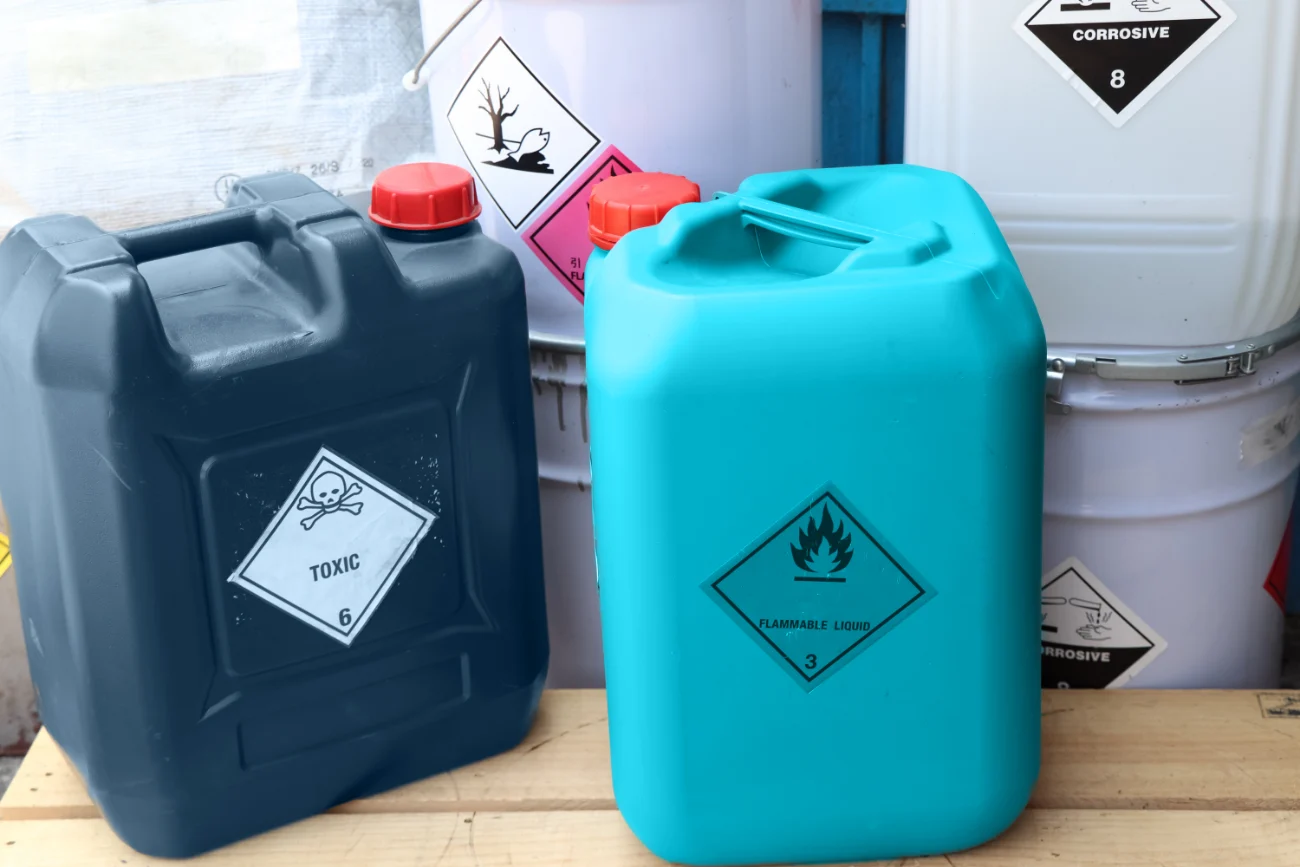


 Business Central empowers Companies

Modernize Processes and make them More Efficient Digitalization in
the Chemical Industry
Companies in the chemical industry 🧪 face major challenges: On the one hand, regulatory requirements are increasing; on the other hand, supply chains are becoming increasingly complex, and cost pressures continue to rise. Digitalization is a key factor when it comes to making processes in chemical companies more transparent, efficient, and secure. This is where ERP systems such as Dynamics 365 Business Central come into play: They help chemical companies centrally manage data, integrate processes, and respond more quickly to market changes and new requirements.
Key Challenges for Companies in the Chemical Industry
The chemical industry in Germany is currently facing cost, competitive, and transformation pressures all at once. With the help of an ERP system such as Dynamics 365 Business Central, you can effectively address these challenges. For example, Business Central enables integrated planning, targeted cost accounting, and the tracking of products and shipments. The automation of processes also plays a crucial role. In addition, companies can store and manage a wide range of relevant and legally required information in Business Central.
Rising Cost Pressure
A key driver of digital transformation in the chemical industry is the increasing cost pressure companies face. In particular, high energy prices and fluctuating raw material costs require them to make their processes increasingly efficient and make optimal use of resources.
Solution in Dynamics 365 Business Central
If you use Business Central, you can perform your cost accounting in greater detail and gain significantly better transparency into the actual costs of your products and processes. The following can be implemented there:
- Recording of material, energy, machinery, labor, and overhead costs
- Calculation of standard, target, and actual costs
- Analysis of price, quantity, consumption, and capacity variances
- Contribution margin analysis by product, customer, market, plant, or lot
- Tracking of cost centers and cost objects using dimensions
- Simulation of various raw material and energy price scenarios
- Post-calculation of completed production orders
- Integration of energy consumption data from metering systems or production facilities
Examples from Business Central
In Business Central, formulas (via Production BOM) can be defined for products or items that are to be manufactured.
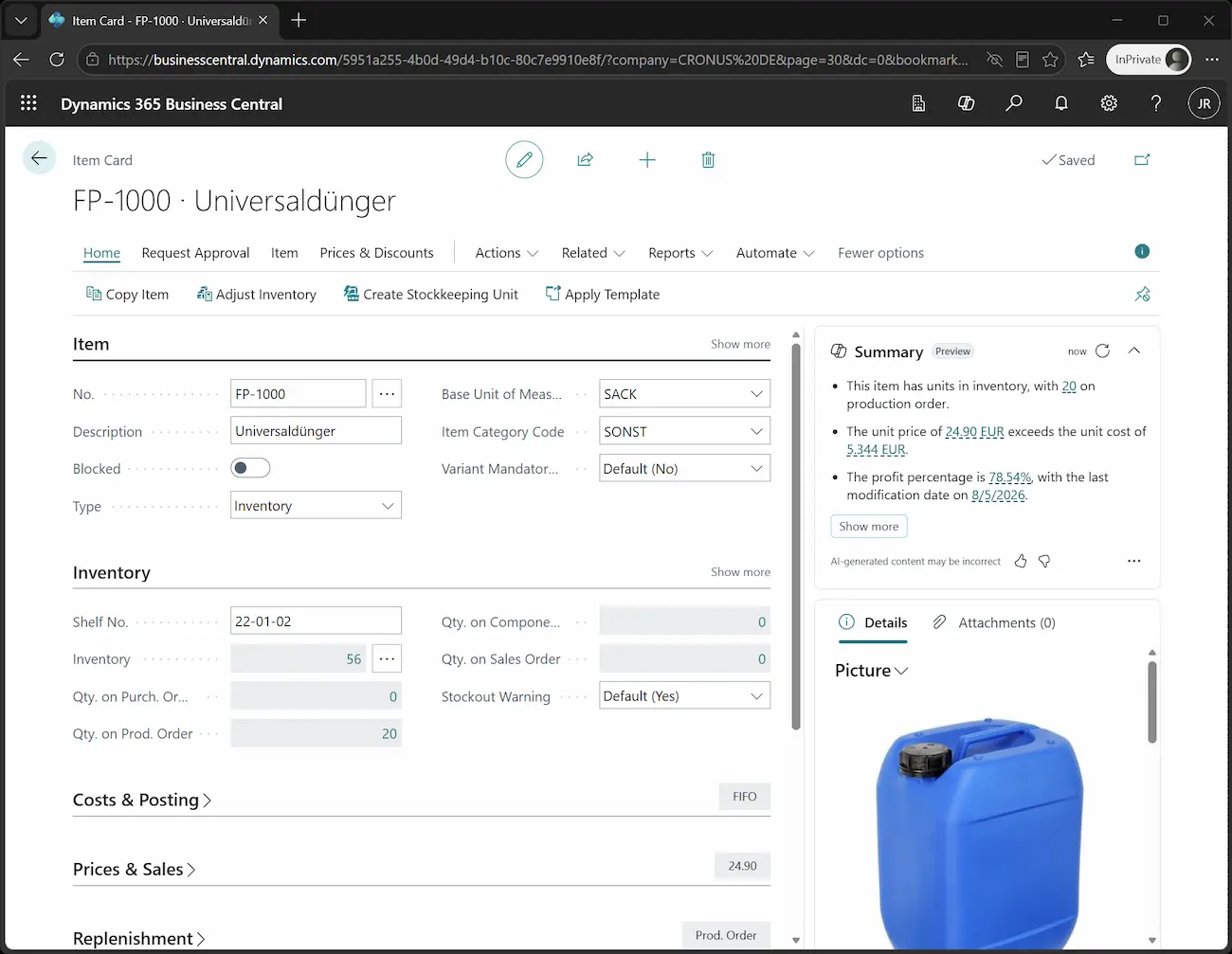
You can access the Production BOM by selecting ‘Related’ -> ‘Bill of Materials’ -> ‘Production’ and then ‘Production BOM’:
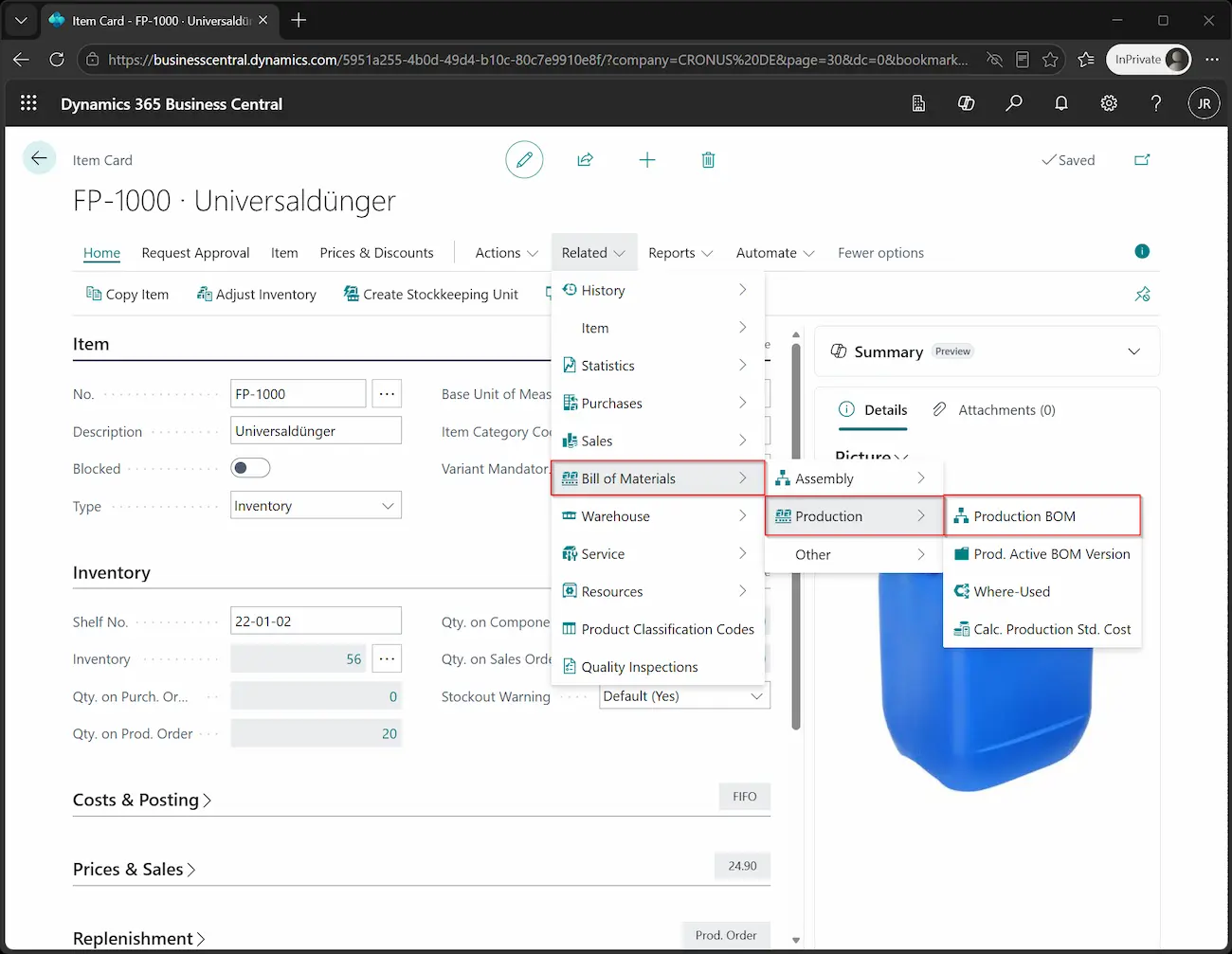
These, in turn, can be used to link ingredients (via components):
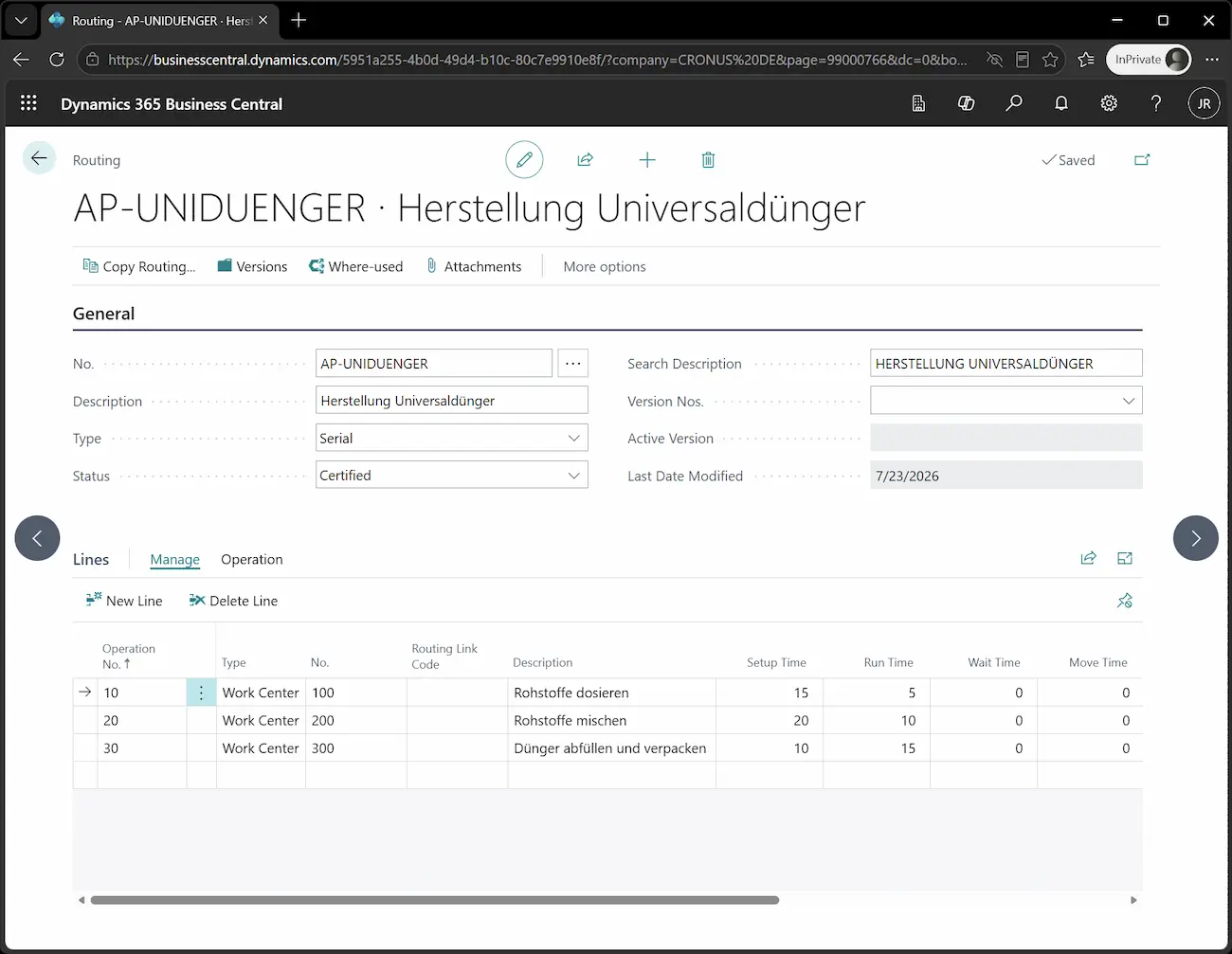
In addition, you can create routings that include the individual steps involved in manufacturing the product:
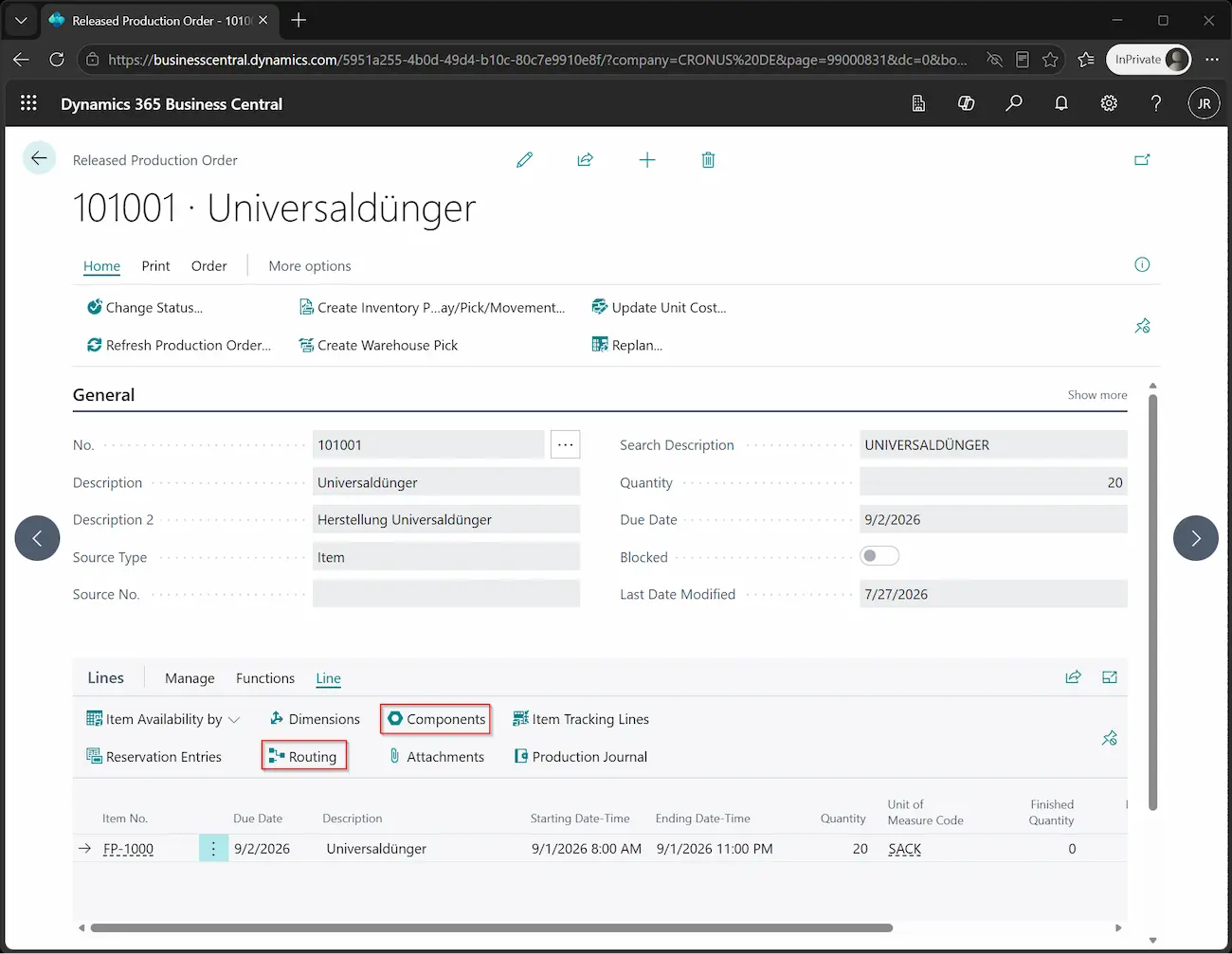
You can then view this information at any time during the rest of the process in the Production Order by selecting ‘Components’ and ‘Routing’.
Solution in Microsoft Power BI
With the manufacturing analyses in Power BI for Business Central, you can evaluate various production metrics. These include, for example, material and capacity costs, standard cost variances, production times, scrap, and workstation utilization. The analyses help you identify bottlenecks and cost overruns early on and take action to address them.
To better assess which product groups are economically profitable, costs incurred along the value chain can be systematically recorded and analyzed. One way to do this is through cost-to-serve analyses, which take various cost components into account. For a chemical company, such a calculation might include the following costs, for example:
- Raw material costs per formula or production bill of materials
- Energy consumption per workstation or process step
- Setup, cleaning, and lab times
- Packaging and hazardous materials costs
- Storage and transportation costs
- Sales costs and customer-specific requirements
- CO₂ costs
The cost-to-serve analysis is used to determine the total costs associated with serving customers, processing orders, or providing products and distribution channels. Unlike a contribution margin analysis, this method also takes process-related costs into account. This allows you to evaluate the profitability of various customers, products, or sales channels more comprehensively and identify potential areas for optimization.
Supply Chain Risks and Increasing Complexity
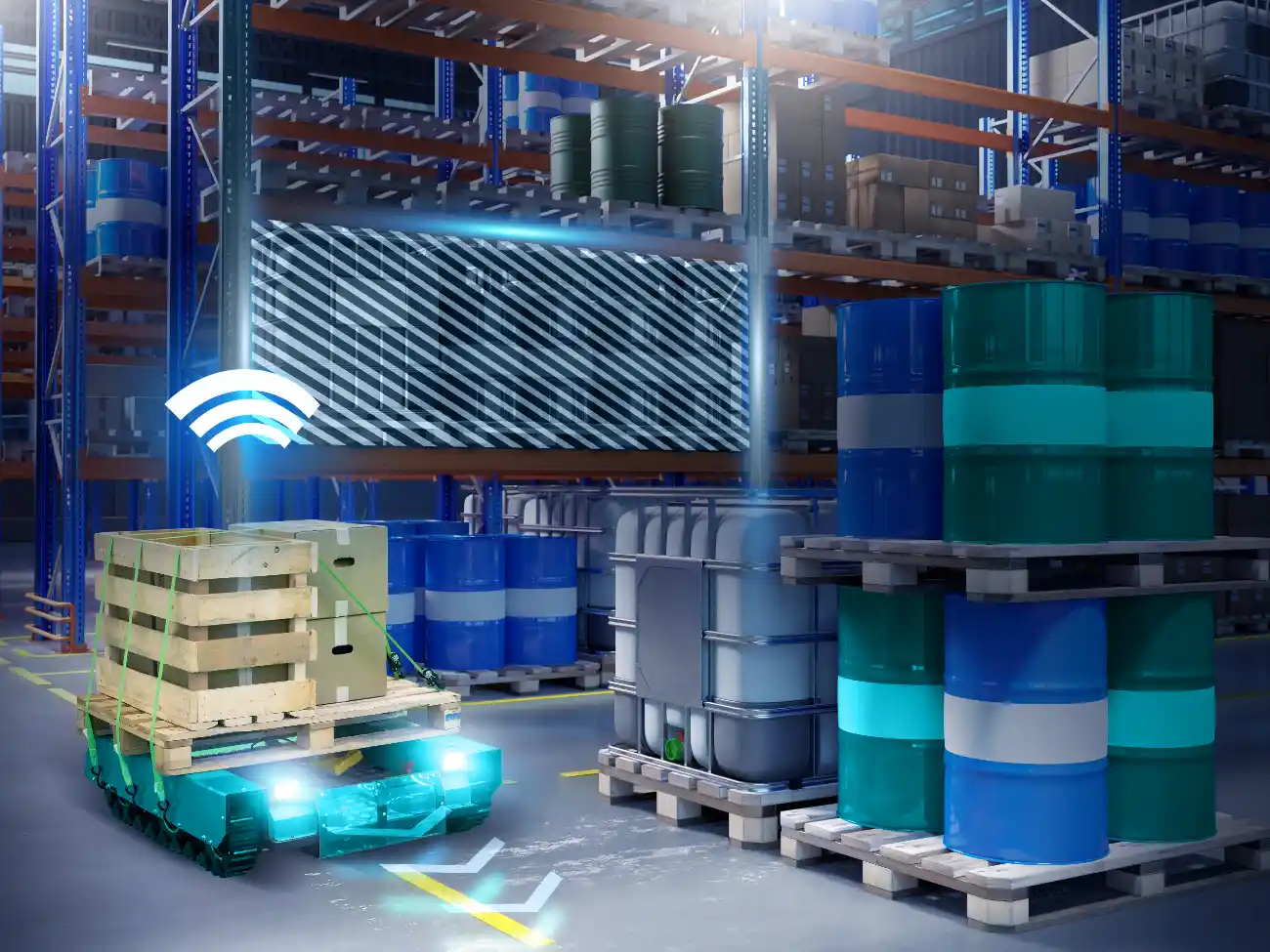
Chemical products are often part of global value-added networks involving numerous suppliers, production sites, and customers. These complex structures require a high degree of transparency and efficient coordination of the individual process steps. In addition, many chemical companies rely on international flows of raw materials, energy, and transportation. This can lead to disruptions if geopolitical conflicts or trade restrictions arise, or if individual suppliers are unable to deliver at short notice.
Solution in Dynamics 365 Business Central
Business Central supports you in this regard:
- Supplier evaluation based on price, quality, on-time delivery, and risk
- Multiple sourcing options per raw material
- Minimum and safety stock levels
- Reorder lead times and procurement parameters
- Lot and origin information
- Approval workflows for new suppliers
- Storage of certificates and inspection documents
- Automated alerts for late deliveries
- Stock coverage and missing parts lists
- Integration with external risk or creditworthiness platforms
In addition, workflows in Power Automate can be used to automatically send a notification to Purchasing and Quality Assurance when, for example, supplier certificates are about to expire or safety data sheets are missing.

All Business Central
Actions for Power
Automate At a Glance
Actions
Weak Demand and Volatile Markets
Weak exports, intense international competition, and low production capacity utilization make it difficult to plan production and investments in the chemical industry. In addition, economic pressures and uncertain market conditions make long-term planning more challenging.
Solution in Dynamics 365 Business Central
Business Central can integrate various business areas - such as Sales, Purchasing, Warehouse, and Manufacturing - into a unified planning process. This enables the management of the following areas, among others:
- Sales forecasts by product, customer, and time period
- Demand planning with MRP and MPS
- Safety stock and lead times
- Production and procurement planning
- Workstation and machine utilization
- Master orders and delivery calls
- Alternative suppliers and substitute items
- Various scenarios for fluctuating demand
To manage the uncertain economic situation, you can implement rolling sales and operations planning (S&OP). In this process, the sales department regularly prepares sales forecasts, the purchasing department assesses the availability of raw materials and delivery times, while the production department reviews capacities and potential bottlenecks. Controlling then assesses the impact on costs, margins, and liquidity before management makes a decision on how to proceed.
Business Central provides the necessary data from operational processes for this purpose. With the help of Power BI, this information can also be visualized, allowing scenarios, inventory coverage, capacity utilization, and financial impacts, for example, to be clearly presented.
Traceability, Quality, and Product Liability
In the chemical industry, it is essential that raw materials, intermediate products, finished products, and shipments can be traced at the lot level. Rapid tracing of the affected lots is particularly necessary in the event of quality deviations or customer complaints. The following information, among others, may be relevant:
- Allocation of raw materials to production lots
- Identification of the customers who received the shipments
- Documentation of test results and approvals
- Determination of affected remaining inventory
- Tracking of the suppliers involved along the supply chain
Solution in Business Central
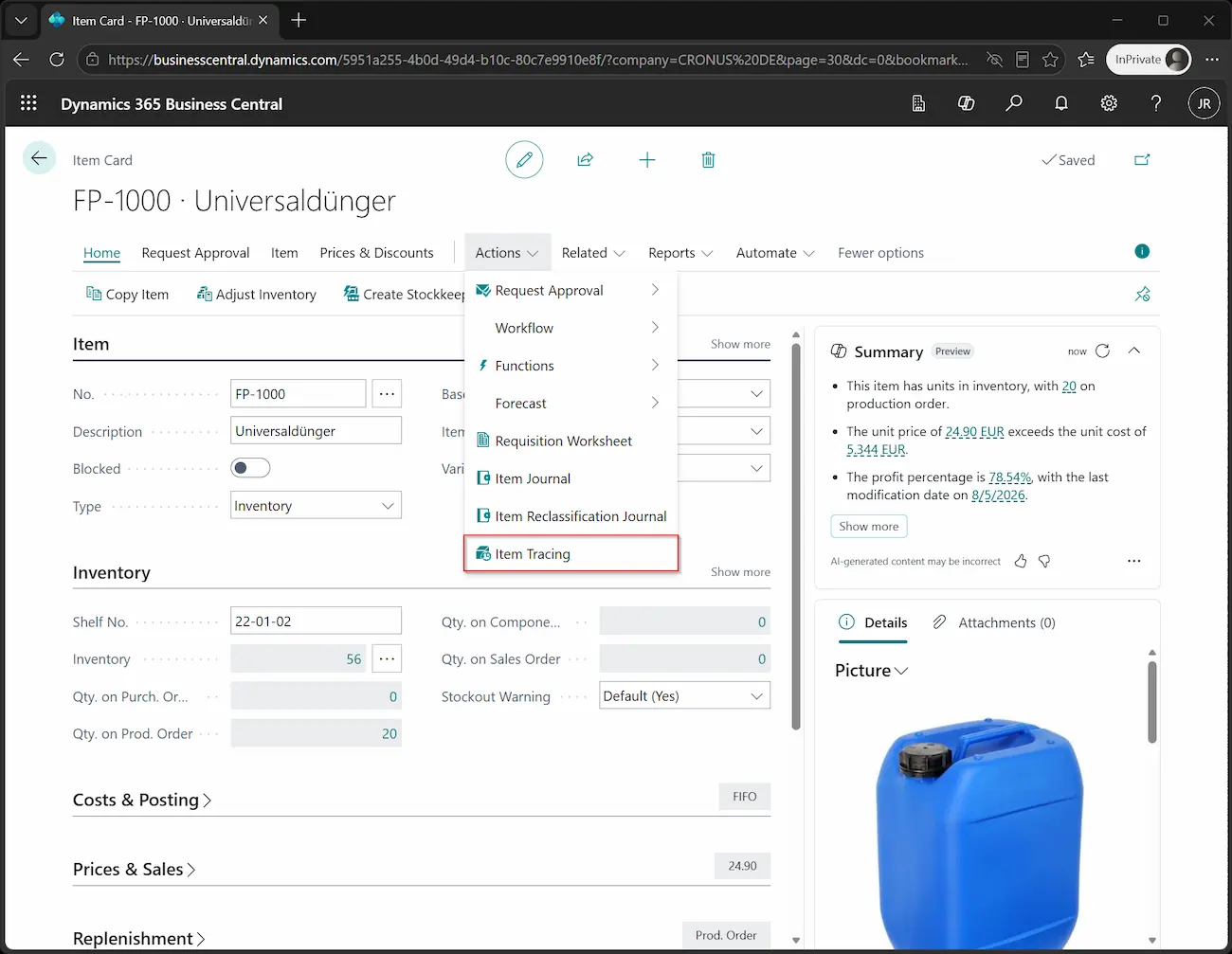
In Business Central, lots can be tracked using Item Tracing. This feature provides complete documentation of everything from production to the delivery of the item.
To do this, open an item card. Navigate to ‘Actions’ -> ‘Item Tracing’:
With the introduction of Quality Management in Business Central 2026 Release Wave 1, features to support quality management in Business Central were made available. This allows you to perform quality checks in various process areas, such as during goods receipt, during production, during assembly, and in warehouse processes. In addition, features are available for inspection templates, recording measurement values, evaluation based on defined criteria, and the management of quarantined inventory, blocked lots, and downstream processes.
A possible workflow for a goods receipt and quality inspection process might look like this:
- The goods receipt for a raw material lot is recorded.
- A quality inspection is created for the lot.
- The lot remains on hold until the inspection is completed.
- The relevant inspection and measurement values are documented.
- Based on the inspection results, the lot is either released or further processed.
- In the event of nonconformities, actions such as storing the lot in a quarantine area, filing a complaint with the supplier, or disposing of the lot may be initiated.
- The recorded inspection results can be linked to and documented along with the associated information, such as details on suppliers, items, and lots.
If your company has additional requirements - such as the integration of a Laboratory Information Management System (LIMS), statistical process control, or the management of Corrective and Preventive Actions (CAPA) - you may need to use a supplementary software solution, depending on the specific use case.
Compliant and Efficient Hazardous Substance Management and Documentation Requirements
A core responsibility of chemical companies is the management of hazardous substances. Hazardous substance management encompasses all measures for the safe and legally compliant handling of hazardous substances within a company. The goal is to minimize risks to employees, the environment, and operational resources, and to ensure compliance with legal requirements and accurate, complete documentation.
The legal requirements for hazardous substance management are largely determined by European regulations. A central foundation is the REACH Regulation (Registration, Evaluation, Authorization, and Restriction of Chemicals). It sets forth essential requirements for the handling of chemicals, including their registration, evaluation, authorization, and restriction, as well as the flow of information within the supply chain.

Solution in Business Central
In this context, Business Central can manage the following information:
- Substance and product master data
- Hazard classes
- UN numbers and transport classifications
- Safety data sheets
- REACH registration information
- Restrictions on use
- Customer- and country-specific labeling
- Certificates with version and expiration dates
- Approval status of substances and products
- Documentation of shipped product and lot versions
In conjunction with SharePoint and Microsoft 365, you can set up structured and controlled document management. In addition, the review, approval, and distribution process for documents - such as safety data sheets - can be supported and automated using Power Automate.
Sustainability and Regulatory Requirements
Sustainability requirements are also playing an increasingly important role in the chemical industry. As topics such as CO₂ reporting, the circular economy, and ESG requirements become more relevant, the need for detailed and reliable data on materials, production processes, and supply chains is also growing. With the help of digital technologies, companies can automatically collect and analyze this data, thereby saving a significant amount of time.
Solution in Business Central
Business Central includes a sustainability module that was first released with the 2024 Release Wave 1. Since then, its functionality has been continuously expanded. It now primarily includes the following features:
- Tracking and management of Scope 1, Scope 2, and Scope 3 emissions
- Processing of CO₂, CH₄, and N₂O values
- Tracking of water and waste intensities
- Management of emission factors
- Sustainability journals
- Collection of sustainability data via purchase documents and general ledger entries
- Internal CO₂ charges
- Carbon credits
- Conversion of emissions to CO₂ equivalents (CO₂e)
Chemistry-Specific Approach
In the chemical industry, emission factors can be defined for various resources and process steps. Examples include:
- Purchased raw materials
- Electricity, gas, and steam
- Production workstations
- Packaging
- Modes of transportation
- Waste disposal
- Outsourced manufacturing
Based on this, CO₂ emissions can be recorded and analyzed on a product- or lot-specific basis in the future. However, the functionality of Business Central is generally insufficient for creating a reliable Product Carbon Footprint. In practice, specialized extensions or integrated sustainability solutions are often necessary, particularly for incorporating real measurement data, mapping mass and energy balances, applying appropriate allocation methods, and accounting for complex production and site structures.
At a Glance: The Role of an ERP System for your Company in the Chemical Industry
Using the Dynamics 365 Business Central ERP system offers the following benefits specifically for companies in the chemical industry:
- Centralized database: In Business Central, purchasing, production, warehousing, sales, financial accounting, and controlling all access the same unified database. This improves transparency, enhances data quality, and facilitates collaboration between the various business units.
- In-depth profitability analyses: Using contribution margin calculations, cost-to-serve analyses, and Power BI, companies can better assess which products, customers, markets, or sales channels are truly profitable. It also highlights areas where there is still potential for optimization.
- Optimized production planning: Business Central integrates sales forecasts, material requirements planning (MRP/MPS), capacity planning, and production and procurement planning. This allows for better coordination of material availability, capacities, and production orders.
- More efficient use of resources: Based on formulas, production bills of materials, routings, and production orders, you can efficiently plan the use of materials, personnel, and machinery while reducing scrap and downtime.
- Automated workflows and approval processes: With Dynamics 365 Business Central and Power Automate, approvals, notifications, and recurring processes can be automated. This simplifies tasks such as purchase orders, supplier approvals, and the management of safety data sheets and certificates.
- Greater transparency in the supply chain: Features such as supplier evaluations, safety stock, alternative sources of supply, lead times, and lot and origin information help you identify supply chain risks early on and ensure supply security.
- Seamless traceability: Raw materials, intermediate products, and finished goods can be tracked by lot from goods receipt through production to shipment. This makes it easier to respond to complaints and recalls and to determine the cause of quality deviations.
- Quality management support: Quality inspections conducted during goods receipt, production, or in the warehouse can be documented in a structured manner.
- Regulatory compliance: Business Central helps you manage documentation, certificates, REACH-related information, and safety data sheets, thereby creating a solid foundation for meeting regulatory requirements. If your company has specialized requirements regarding hazardous substance management, you can integrate add-ons from Microsoft Marketplace.
- Sustainability and ESG reporting: The integrated sustainability module in Business Central helps you track emissions, energy consumption, and other sustainability metrics. This not only enables you to analyze CO₂ emissions but also allows you to meet regulatory reporting requirements more efficiently.
- Powerful data analytics: With the integration of Power BI, you can make efficient, data-driven decisions based on production metrics, cost trends, capacity utilization, or sustainability data. Key metrics can also be clearly visualized.
- Scalability and flexibility: Business Central grows with your company’s needs and can be expanded as needed with industry-specific extensions, such as those for hazardous substance management.

Conclusion
Business Central can provide your company in the chemical industry with targeted support to respond more quickly and effectively to the industry’s challenges and changes.
It makes sense to build a comprehensive solution with Microsoft Dynamics 365 Business Central as the central platform. Even with the standard features (particularly the Manufacturing module), many relevant processes can be efficiently mapped. However, depending on your company’s specific requirements, you can expand this functionality as needed.
In addition, you can use the Power Platform and Microsoft 365 to automate processes and provide information centrally. For industry-specific requirements - such as those in the areas of laboratory operations, EHS, or hazardous substance management - specialized add-ons can also be seamlessly integrated. This allows you to rely on a flexible, comprehensive solution that makes optimal use of Business Central’s standard capabilities while also addressing your unique requirements.
Digital Transformation in the Chemical Industry: Our Expertise
At AGOLUTION, we know the challenges and stumbling blocks that ERP projects bring and understand how to deal with them. We also have experience working with companies in the chemical industry. Feel free to contact us if you are planning an ERP project and are looking for a reliable partner with experience and industry knowledge.